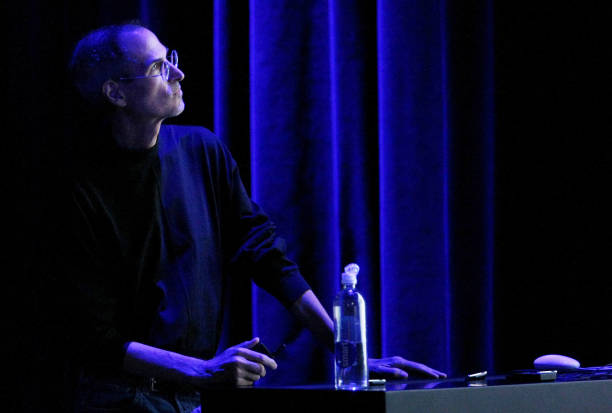
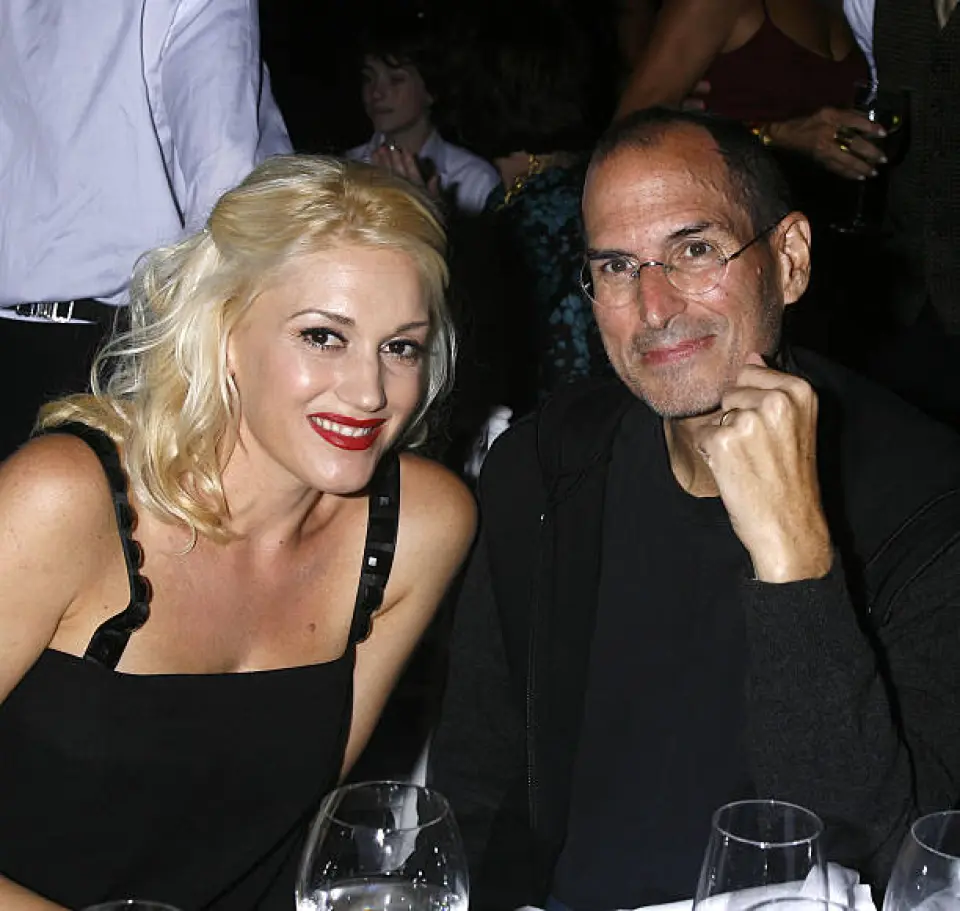
2009 - leave of absence
Below is a chronological timeline of the year's defining moments, featuring key quotes from Steve Jobs, followed by my own personal thoughts and reflections on experiencing this historic era firsthand.
As many of you know, I have been losing weight throughout 2008. The reason has been a mystery to me and my doctors. A few weeks ago, I decided that getting to the root cause of this and reversing it needed to become my #1 priority. Fortunately, after further testing, my doctors think they have found the cause—a hormone imbalance that has been “robbing” me of the proteins my body needs to be healthy... I will continue as Apple’s CEO during my recovery.
January 6, 2009 — The Final Macworld San Francisco
- With Steve Jobs on medical leave, Senior VP of Worldwide Product Marketing Phil Schiller delivers the keynote, marking Apple's final appearance at the historic expo.
- Apple completes the unibody transition for its pro portables by introducing the 17-inch Unibody MacBook Pro, featuring an innovative, non-removable lithium-polymer battery that delivers an industry-first 8 hours of runtime and a 1,000-recharge lifespan.
- In a massive victory for digital consumers, Schiller announces a sweeping restructuring of the iTunes Store: all remaining digital rights management (DRM) restrictions are stripped away, tracks are transitioned to high-fidelity 256kbps AAC formats, and a flexible pricing model is introduced.
January 14, 2009 — Leave of Absence Announced
- Steve Jobs adjusted his plans and officially announced a six-month medical leave of absence, during which Tim Cook managed daily operations.
March 11, 2009 — The Talking iPod shuffle
- Apple drops the 3rd-Generation iPod shuffle, shrinking the aluminum music player down to nearly half its previous size. By removing every physical control button from the device's body and relying entirely on a proprietary in-line headphone remote, Apple introduces VoiceOver, allowing the ultra-compact player to artificially speak song titles, artists, and playlist pathways directly into the user's ears.
June 8–12, 2009 — WWDC 2009 (San Francisco)
- Phil Schiller and software engineering head Bertrand Serlet lead a jam-packed keynote to map out Apple's structural stability era. Senior VP of iPhone Software Scott Forstall details iPhone OS 3.0, finally bringing fundamental tools like Cut, Copy, and Paste, system-wide Spotlight search, landscape keyboard mapping, and native MMS messaging capability to the platform.
- Apple expands the unibody laptop family by repackaging the 13-inch aluminum notebook as the 13-inch MacBook Pro, equipping it with a FireWire 800 port, an SD card slot, and a premium backlit keyboard.
- Apple unveils the iPhone 3GS (the "S" explicitly standing for Speed). While visually identical to the 3G, it uses an upgraded ARM Cortex-A8 core to deliver twice the execution velocity, adds a 3-megapixel autofocus camera with native VGA video recording capabilities, and introduces hands-free Voice Control long before the dawn of Siri.
September 9, 2009 — "It's Only Rock and Roll" Media Event (San Francisco)
- Steve Jobs steps onto the stage at the Yerba Buena Center to a thunderous, prolonged standing ovation, marking his official public return to the company following a successful liver transplant.
- Apple heavily updates the 5th-Generation iPod nano, wrapping it in a polished, glossy anodized aluminum frame while adding an integrated video camera, a built-in microphone, an FM radio tuner, and an integrated pedometer.
Good morning. Thank you. I'm very happy to be here today with you all. As some of you may know, about five months ago I had a liver transplant. So I now have the liver of a mid-20s person who died in a car crash and was generous enough to donate their organs. I wouldn't be here without such generosity. I hope all of us can be as generous and elect to become organ donors.
I'd like to take a moment and thank everybody in the Apple community for the heartfelt support I got, too. It really meant a lot. I'd also like to especially thank Tim Cook and the entire executive team of Apple. They really rose to the occasion and ran the company very ably in that difficult period, so thank you guys. Let's give them a round of applause.
I'm vertical. I'm back at Apple. Loving every day of it. I'm getting to work with our incredibly talented teams to come up with some great new products for you all in the future.
October 20, 2009 — The Unibody iMac & The Magic Mouse
- Apple completely alters its premium desktop industrial design language by introducing the Late 2009 Unibody iMac. Ditching the older aluminum-on-plastic backing, the new machines feature a stunning, edge-to-edge glass facade seamlessly mated to an all-aluminum rear chassis, scaling up display footprints into expansive 21.5-inch and 27-inch 16:9 widescreen canvases.
- Alongside the desktop tower, Apple releases the Magic Mouse. Replacing the mechanical scroll-ball Mighty Mouse, it features a seamless, smooth acrylic top shell that acts as a multi-touch surface, translating standard iPhone swiping and scrolling gestures directly into the desktop experience.
- The white campus classic notebook gets its final major design layout shift with the introduction of the Late 2009 Polycarbonate MacBook, utilizing a curved, durable plastic unibody mold paired with a non-slip rubberized bottom surface framework.

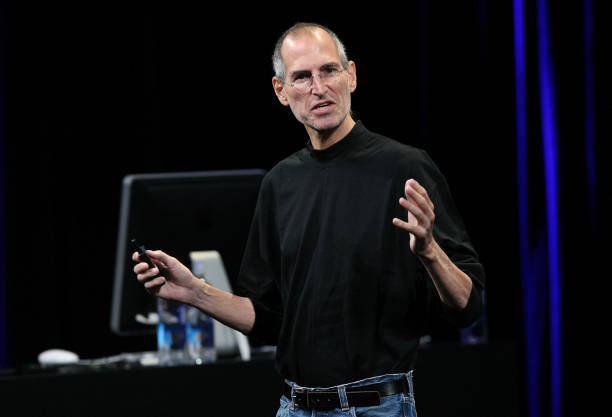
Looking back, 2009 was an undeniably emotional and surreal year to be an observer of Apple. The Steve Jobs I had stood just a dozen feet away from in January of 2008—the visionary holding the MacBook Air aloft at Moscone Center—was clearly fading away by the end of that same year. When 2009 arrived, his complete absence from the Macworld and WWDC stages cast a shadow over the community. Yet, like so many others, I don't think I fully realized, or perhaps simply didn't want to accept, just how incredibly serious his health struggles actually were. We were all clinging to the hope of his recovery while the company he built kept moving forward at a relentless pace.

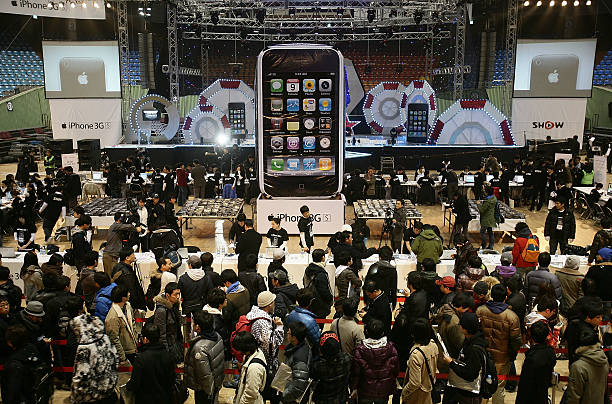

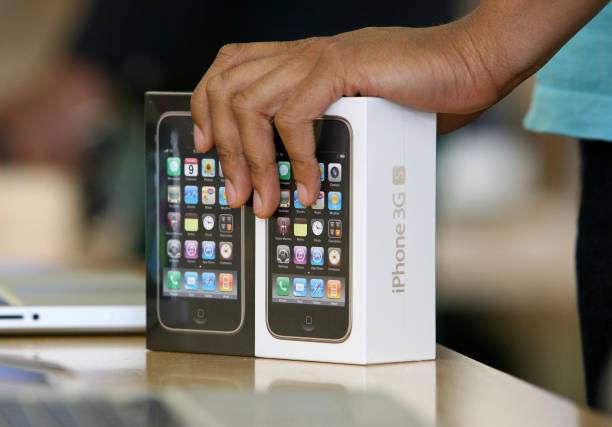
And that pace was beautifully embodied in the hardware. That summer, Phil Schiller took the stage to announce the iPhone 3GS, and the "S" definitively stood for speed. The performance leap was staggering. Even though it retained the exact same physical enclosure as the iPhone 3G, under the hood it felt like an entirely new class of device.
Having carried a stark white iPhone 3G for the previous twelve months, I naturally made the jump to the stealthy black model for the 3GS. It was a strategy that served me well: whenever Apple chose to keep a design identical for a second year, swapping the color was the ultimate trick to make the upgrade look, feel, and cycle through the day with a sense of fresh novelty.
The year wrapped up with a much-needed victory for my desktop workflow. In October, Apple quietly retired the old wireless Mighty Mouse and introduced the seamless, low-profile Magic Mouse. Its predecessor had been an incredibly clever device, but it possessed one legendary, infuriating flaw: that microscopic mechanical scroll ball. No matter how clean you kept your desk, it inevitably trapped skin oils and lint, eventually requiring a meticulous cleaning ritual—or the classic trick of vigorously rubbing it upside down against a piece of paper—just to get it to scroll downward again.
The Magic Mouse solved that problem elegantly by throwing out mechanical moving parts altogether. Replacing the ball with a smooth, continuous acrylic multi-touch surface was pure genius. Not only did it look like a futuristic piece of sculpture sitting next to my keyboard, but it brought the fluid gestures I was already loving on my notebook trackpad to the desktop desktop experience, completely free of mechanical failure.